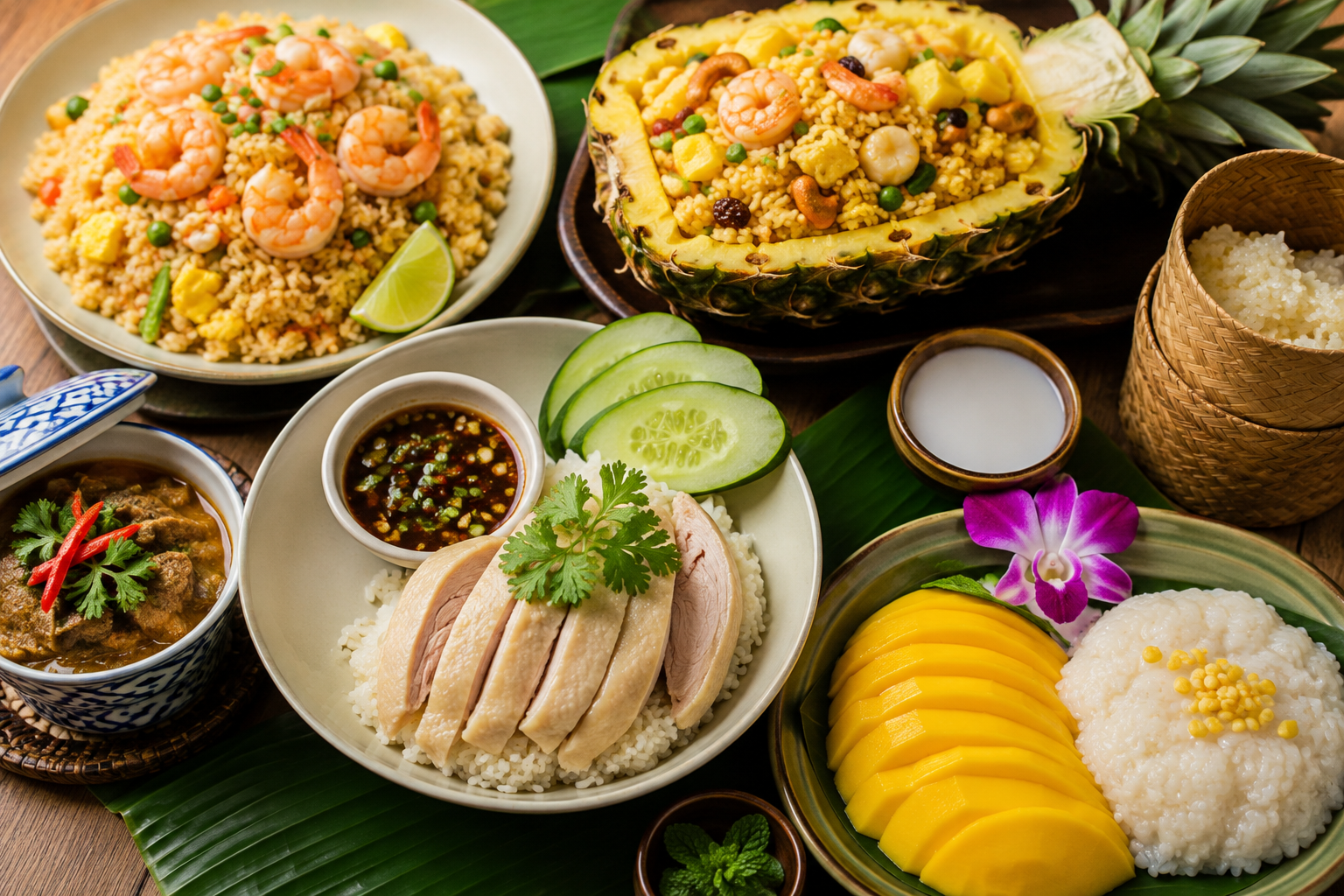
When most people think about Thai food, Pad Thai is often the first dish that comes to mind. But while these delicious stir-fried noodles deserve their popularity, Thai cuisine has an entire world of rice dishes waiting to be explored.
Rice is one of the foundations of Thai cooking. From fragrant jasmine rice served alongside curries to crispy fried rice, sticky rice paired with grilled meats, and sweet mango sticky rice, rice appears in Thai cuisine in countless forms.
That variety makes Thai rice dishes especially interesting for anyone who wants to explore beyond the most familiar orders at Thai restaurants.
Some dishes are savory and filling, while others are sweet enough to serve as dessert. Some are designed to accompany a saucy curry or stir-fry, while others are complete meals with meat, seafood, vegetables, and seasonings mixed directly into the rice.
Whether you're ordering Thai food for the first time or simply looking for something different from your usual Pad Thai, these are some of the Thai rice dishes worth trying.
And with Springroll, discovering local Thai restaurants and ordering online makes it easy to put something new on your dinner table.
Why Rice Is So Important in Thai Cuisine
Rice isn't simply a side dish in Thailand. It is a central part of everyday meals and has shaped Thai cooking for generations.
Thailand is one of the world's major rice-producing countries, and different varieties of rice are used for different purposes. Jasmine rice, known in Thai as khao hom mali, is prized for its fragrant aroma and soft texture. It is commonly served with curries, stir-fries, grilled meats, and other savory dishes.
Sticky rice, or khao niao, has a different texture and is particularly important in Northern and Northeastern Thai cuisine. Rather than being eaten with a spoon like steamed jasmine rice, sticky rice is traditionally formed into small pieces with the fingers and used to scoop up food.
Rice can also become the main component of a dish. Fried rice combines cooked rice with proteins, vegetables, eggs, and seasonings, while dishes such as Khao Man Gai turn seasoned rice and poached chicken into a complete meal.
Even desserts rely on rice. Mango sticky rice combines sweet glutinous rice with coconut milk and ripe mango, creating one of Thailand's most recognizable desserts.
So when you explore Thai rice dishes, you're not just looking at variations of the same ingredient. You're seeing how rice can be transformed into completely different meals and flavors.
1. Khao Pad: Classic Thai Fried Rice
If you're new to Thai rice dishes, Khao Pad is one of the easiest places to start.
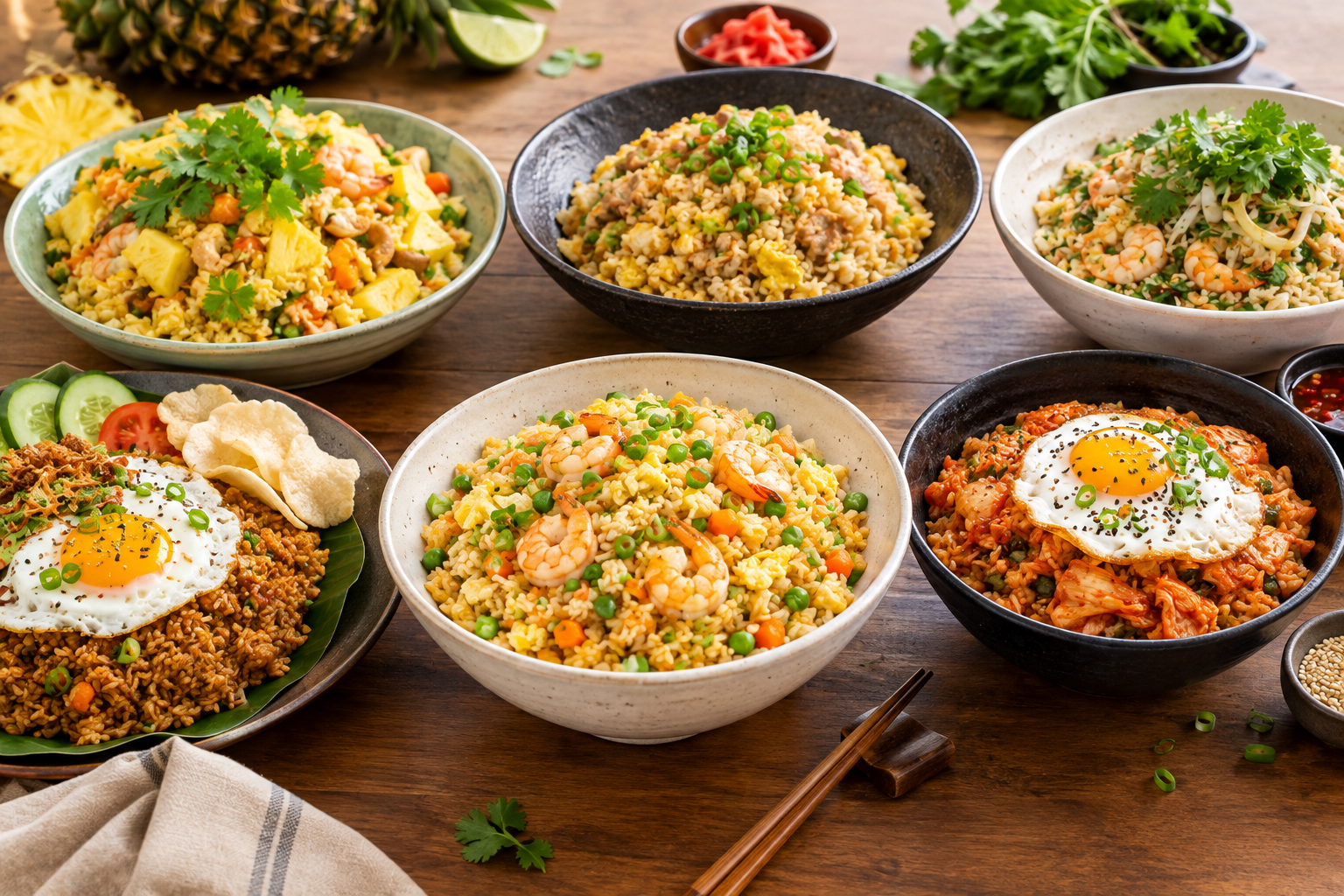
Khao Pad simply means Thai-style fried rice, but that doesn't mean every version tastes the same. Thai fried rice is typically cooked in a hot wok with jasmine rice, egg, vegetables, seasonings, and a choice of protein.
Depending on the restaurant, you might find chicken, shrimp, beef, pork, crab, or vegetable versions.
What makes Thai fried rice different from many other fried rice styles is its balance of savory, aromatic, and slightly sweet flavors. Fish sauce, soy sauce, garlic, onions, and other seasonings help build the flavor, while lime and fresh herbs can add brightness.
A plate of Khao Pad can work as a complete meal, but it also pairs well with other Thai dishes when you're ordering for a group.
If you usually order Pad Thai, switching to Khao Pad is an easy way to try something different without moving too far outside your comfort zone.
2. Pineapple Fried Rice: Khao Pad Sapparot
For something more colorful and slightly sweeter, try Khao Pad Sapparot, or Thai pineapple fried rice.
This popular variation combines fried rice with fresh pineapple and often includes cashews, vegetables, raisins, egg, and a choice of protein such as shrimp or chicken. Some restaurants serve it inside a hollowed-out pineapple, turning the dish into an especially eye-catching presentation.
The pineapple brings a subtle sweetness and a juicy texture that contrasts with the savory fried rice. Cashews can add crunch, while curry powder or other seasonings may give the dish an aromatic quality.
Shrimp pineapple fried rice is particularly popular because the sweetness of the pineapple pairs naturally with seafood.
This is a good choice if you want something that feels lighter and more refreshing than a heavily seasoned fried rice. It's also a fun option for sharing because the combination of sweet, savory, crunchy, and aromatic flavors gives everyone something interesting to discover.
3. Khao Man Gai: Thai Chicken and Rice
If you enjoy simple, comforting meals, Khao Man Gai deserves a place on your list.
Often translated as Thai chicken and rice, Khao Man Gai features poached chicken served over rice that has been cooked with chicken stock and aromatics. The rice absorbs the flavor of the cooking liquid, giving it much more character than plain steamed rice.
The dish is typically served with a savory, spicy dipping sauce made with ingredients such as fermented soybean paste, ginger, garlic, chilies, and other seasonings.
Fresh cucumber and herbs may accompany the chicken and rice, providing a cool contrast to the sauce.
What makes Khao Man Gai appealing is its simplicity. There isn't an overwhelming number of ingredients competing for attention. Instead, the quality of the rice, tenderness of the chicken, and punchy dipping sauce work together.
If you're someone who prefers savory meals without heavy sauces, this can be an excellent Thai dish to try.
4. Khao Mok Gai: Thai Muslim-Style Chicken and Rice
Another rice dish worth seeking out is Khao Mok Gai, a fragrant chicken and rice dish influenced by Thai Muslim cooking traditions.
The dish is often compared to biryani because of its use of aromatic spices and seasoned rice, although the Thai preparation has its own distinctive character.
Chicken is cooked with fragrant rice and spices such as turmeric, cumin, coriander, and cardamom. The result is golden-colored rice with an aromatic flavor that pairs beautifully with tender chicken.
Khao Mok Gai is often served with a green or sweet-and-spicy dipping sauce that adds freshness and heat to the dish.
This is a particularly good choice for diners who enjoy Indian or South Asian rice dishes but want to explore how similar ingredients and techniques appear in Thai cuisine.
You may not find Khao Mok Gai on every Thai restaurant menu, but when you see it, it's worth considering.
5. Khao Kluk Kapi: Shrimp Paste Fried Rice
For more adventurous diners, Khao Kluk Kapi offers a completely different flavor profile.
This traditional Thai rice dish is made by mixing cooked rice with shrimp paste, which gives the rice a distinctive savory and aromatic character.
It is often served with an assortment of ingredients arranged around the rice. These may include sweet pork, shrimp, green mango, cucumber, red onion, chilies, egg, and other fresh or cooked toppings.
The idea is to combine different flavors and textures in each bite.
You may get salty shrimp paste, sweet pork, sour green mango, crunchy vegetables, spicy chilies, and soft rice all at once.
If you're new to shrimp paste, the flavor can be surprisingly strong at first. But if you enjoy fermented ingredients and bold Southeast Asian flavors, Khao Kluk Kapi can be an exciting dish to explore.
It's a great example of how Thai cooking often creates balance by combining contrasting flavors rather than relying on one dominant taste.
6. Sticky Rice With Grilled Meats
Thai sticky rice is particularly important in the country's Northeastern, or Isaan, cuisine.
One of the simplest and most enjoyable ways to experience it is alongside grilled meat.
Moo Ping, or Thai grilled pork skewers, is a popular street food combination. The pork is marinated with a sweet and savory mixture before being grilled over high heat, creating caramelized edges and smoky flavors.
The skewers are often served with sticky rice, which provides a soft, chewy texture and a neutral base for the richly seasoned pork.
You might also encounter sticky rice with grilled chicken or other meats.
This combination works especially well as a casual meal or shared order. The sticky rice is filling without being heavy, while grilled meats bring smoky, savory flavors.
Springroll's guide to Thai Street Food That’s Trending in the U.S. also explores Moo Ping and other Thai street food favorites that are becoming increasingly popular at restaurants across the country.
7. Sticky Rice With Thai Dipping Sauces
Sticky rice isn't limited to grilled meat.
In Thai cuisine, it can also be paired with spicy dipping sauces and grilled or fried foods.
A classic Isaan-style meal might combine sticky rice with grilled chicken, sausage, vegetables, and a spicy dipping sauce such as nam jim jaew.
The sticky rice provides a mild, chewy base that helps balance the stronger flavors of grilled meats and chili-forward sauces.
This is one of the best ways to understand why different varieties of rice matter in Thai cooking. Jasmine rice and sticky rice may both be rice, but their textures and traditional uses create very different eating experiences.
If you've only had jasmine rice with Thai curry, trying sticky rice with grilled food can introduce you to another side of Thai cuisine.
8. Thai Jasmine Rice With Curry
Not every Thai rice dish needs to have the rice mixed into it.
In fact, one of the most important ways to enjoy Thai rice is simply as a fragrant accompaniment to curry.
Steamed jasmine rice is commonly served alongside Thai curries such as green curry, red curry, yellow curry, and Panang curry. The soft grains absorb the rich coconut-based sauces, helping balance the intensity of the curry.
The type of curry can dramatically change the experience.
Green curry tends to be fresh, aromatic, and spicy. Red curry offers a deeper chili flavor, while yellow curry is generally milder and more earthy. Panang curry is thicker and richer, often with a slightly nutty character.
If you want to learn more about these different curry styles, Springroll's guide to Spicy Thai Curries: A Flavor Explosion explores green, red, yellow, and Panang curry and explains what makes each one different.
When ordering curry online, adding jasmine rice is often the easiest way to turn a saucy entrée into a complete meal.
9. Mango Sticky Rice: Thailand's Famous Rice Dessert
Of course, no discussion of Thai rice dishes would be complete without Mango Sticky Rice.
Known as Khao Niao Mamuang, this classic dessert combines sweet sticky rice with ripe mango and coconut milk.
The sticky rice is cooked and sweetened with coconut milk, sugar, and salt. It is then served with slices of ripe mango and often finished with additional coconut sauce.
The result is a simple combination of sweet, creamy, fruity, and slightly salty flavors.
Texture is a major part of the appeal. The sticky rice is soft and chewy, the mango is juicy and tender, and the coconut sauce adds richness.
Mango sticky rice is especially popular during mango season, when ripe mangoes provide the sweetness and fragrance that make the dessert so appealing.
If you've never tried Thai sticky rice before, this dessert is one of the most approachable introductions.
10. Sticky Rice With Other Thai Desserts
Mango isn't the only ingredient that can be paired with sticky rice.
Thai desserts use glutinous rice in several different ways, often combining it with coconut milk, tropical fruit, beans, or sweet toppings.
Depending on the restaurant, you may find variations involving banana, taro, durian, or other seasonal ingredients.
These desserts demonstrate another side of Thai cooking. Savory Thai cuisine is famous for balancing sweet, salty, sour, spicy, and umami flavors, but desserts focus more heavily on tropical ingredients and the richness of coconut milk.
If you enjoy mango sticky rice, exploring other Thai sticky rice desserts can be a natural next step.
How Thai Rice Dishes Get Their Flavor
One of the reasons Thai rice dishes are so enjoyable is that rice itself provides a relatively mild foundation for more intense ingredients.
Thai cooking often builds layers of flavor around that foundation.
Fish sauce provides saltiness and umami. Lime juice adds acidity. Palm sugar contributes sweetness. Chilies bring heat, while garlic, shallots, lemongrass, cilantro, and Thai basil add fragrance.
These flavors don't always appear in every rice dish, but the general idea of balance is an important part of Thai cuisine.
A fried rice dish might combine savory fish sauce with sweet pineapple and fresh lime. A spicy basil rice plate can balance chili heat with fragrant basil and a fried egg. Mango sticky rice pairs sweet mango and coconut milk with a small amount of salt.
This balance is one reason Thai rice dishes can taste complex without necessarily being complicated.
Thai Rice Dishes vs. Thai Noodle Dishes
If you're used to ordering Pad Thai, you might wonder why you should switch to a rice dish.
The biggest difference is texture.
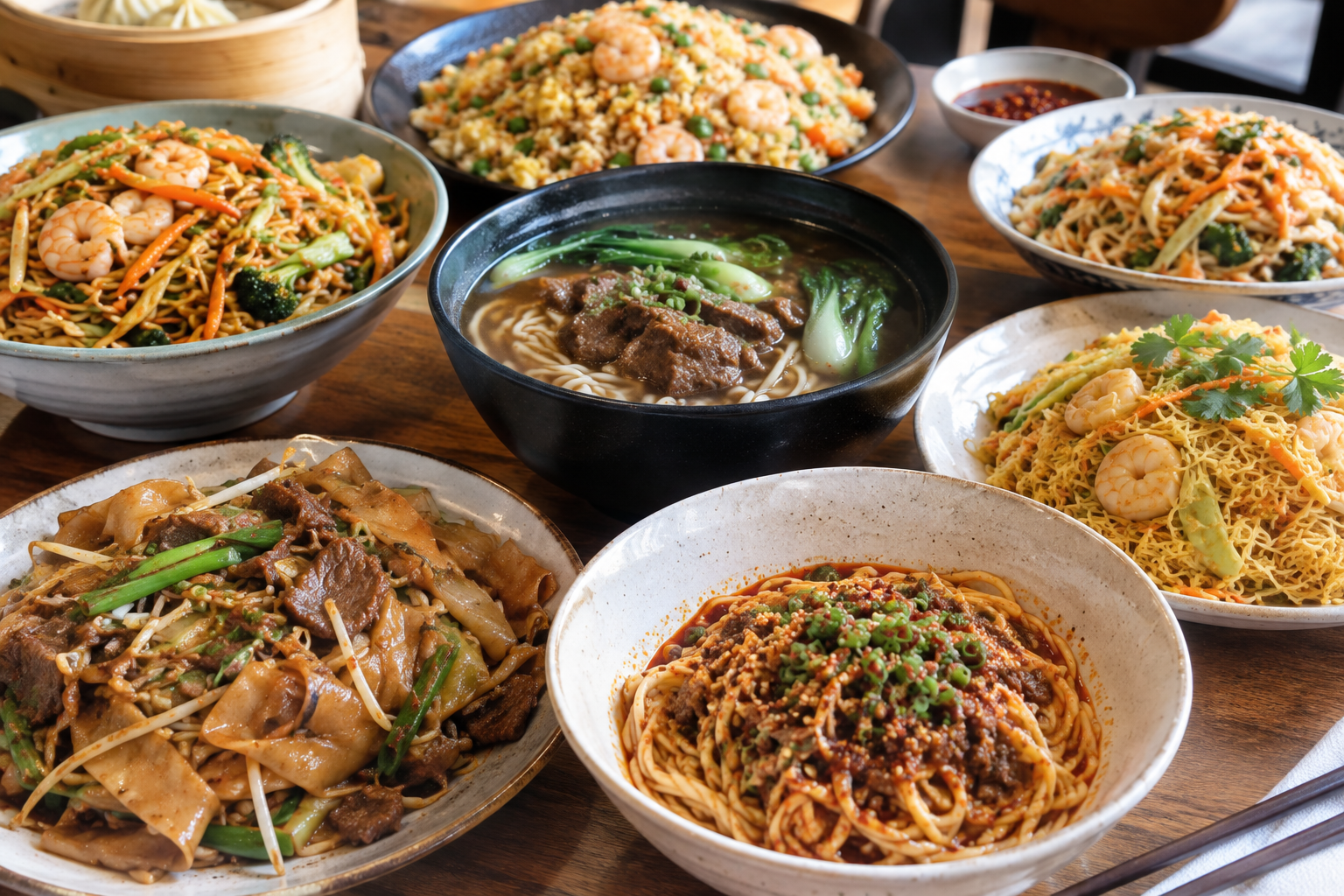
Rice provides a softer, more substantial base, while noodles offer a chewier texture and tend to absorb sauces differently.
Rice dishes can also be particularly convenient for meals with grilled meats, curries, and stir-fries because the rice acts as a natural accompaniment.
If you're interested in comparing Thai dishes beyond rice, Springroll's article Thai vs. Chinese Stir-Fry: Flavor, Ingredient & Spice Differences explores how Thai cooking uses ingredients such as fish sauce, lime, palm sugar, and fresh chilies to create its distinctive balance.
And if you already enjoy Thai noodles, trying a rice-based dish can be an easy way to expand your usual order.
Which Thai Rice Dish Should You Try First?
If you're unsure where to begin, choose based on the flavors you already enjoy.
For a familiar and versatile meal, Khao Pad is an excellent starting point. It's savory, filling, and available with a variety of proteins.
If you prefer something sweeter and more tropical, pineapple fried rice combines savory rice with juicy pineapple and crunchy cashews.
For something simple and comforting, try Khao Man Gai, with tender chicken and flavorful seasoned rice.
If you enjoy aromatic spices, Khao Mok Gai offers a fragrant chicken and rice combination with influences from Thai Muslim cooking.
If you're more adventurous, Khao Kluk Kapi provides a much bolder experience built around shrimp paste and contrasting toppings.
And if you're looking for dessert, Mango Sticky Rice is one of the easiest Thai specialties to recommend.
There is no need to try everything at once. Choose one dish that sounds familiar and another that pushes you slightly outside your usual order.
What to Order With Thai Rice Dishes
Rice dishes can easily be complete meals, but they also work well as part of a larger Thai spread.
If you're ordering for a group, consider combining a rice dish with a curry, stir-fried vegetables, or grilled meat.
For example, pineapple fried rice can provide a sweet and savory centerpiece, while a spicy curry adds richness and heat. Fresh spring rolls can provide a lighter appetizer, and Thai iced tea can offer a sweet, creamy drink alongside the meal.
Thai spring rolls are another popular choice. Springroll's Ultimate Guide to Spring Rolls explores Thai spring rolls alongside versions from Vietnam, China, the Philippines, and other Asian cuisines.
When ordering for several people, choosing dishes with different textures and flavor profiles can make the meal much more interesting than ordering several similar entrées.
How to Order Thai Rice Dishes Online
If you're exploring Thai food online, start by looking beyond the noodle section.
Thai restaurants may organize rice dishes under categories such as Rice Dishes, Fried Rice, Thai Entrées, House Specialties, Street Food, or Desserts.
If you're looking for Khao Pad, you may see it listed simply as Thai Fried Rice or under a protein-specific name such as Chicken Fried Rice or Shrimp Fried Rice.
Pineapple fried rice may appear as Pineapple Fried Rice or Khao Pad Sapparot.
Sticky rice may be listed as a side dish rather than a main entrée, while Mango Sticky Rice will usually appear under desserts.
Reading the descriptions can help you understand what comes with the dish and whether rice is already included.
Springroll makes it easy to browse participating Thai restaurants online, compare menus, and choose your meal before placing an order. Instead of deciding based only on a dish name, you can take your time looking through the menu and find something that matches your craving.
Why Try Thai Rice Dishes?
Thai rice dishes are a simple way to experience the variety of Thai cuisine.
They show how one ingredient can take on completely different roles. Jasmine rice can accompany a creamy curry, become the base of fried rice, or absorb the flavors of a savory chicken dish. Sticky rice can accompany grilled meat or become the foundation for a coconut-rich dessert.
The seasonings and toppings can change just as dramatically.
One plate may be savory and spicy, another sweet and tropical, and another fragrant and mild.
This variety is part of what makes Thai cuisine so enjoyable to explore.
If you've been ordering the same Thai dishes every time, adding a rice dish to your next order can be a small change that opens the door to a much broader selection of flavors.
Explore Thai Food Beyond Pad Thai
Pad Thai will always be a Thai restaurant favorite, but it represents only a small part of the cuisine.
Rice dishes offer another way to explore Thailand's food traditions, from everyday fried rice to regional sticky rice combinations and celebrated desserts.
And the more you explore, the more you'll notice how Thai cuisine balances contrasting flavors. Sweet pineapple can work alongside savory rice. Spicy grilled meat can be paired with mild sticky rice. Rich coconut curry becomes more balanced when served over fragrant jasmine rice. Sweet mango and salty coconut sticky rice can create a dessert that is both simple and complex.
That's what makes Thai food so fun to discover.
Springroll's Thai restaurant marketplace makes it easy to browse local restaurants, explore menus, and order online when you're ready to try something new. You can also explore more Thai food inspiration through Springroll's Guide to Thai Street Food and its article on How Thai Food Became a Staple in American Cities.
Final Thoughts
If your usual Thai order starts and ends with Pad Thai, it's time to give Thai rice dishes a try.
Start with Khao Pad for a classic Thai fried rice, or try pineapple fried rice if you want something sweet and savory. Khao Man Gai offers a simple combination of tender chicken and flavorful rice, while Khao Mok Gai brings aromatic spices to the table.
For something more adventurous, look for Khao Kluk Kapi. And when it's time for dessert, Mango Sticky Rice is a Thai classic that deserves a place on your order.
Whether you're ordering for yourself, feeding the family, or putting together a larger Thai feast, rice dishes offer plenty of options to explore.
The next time you're browsing a Thai restaurant menu on Springroll, don't automatically scroll to Pad Thai. Take a look at the rice dishes and see what catches your attention.
You might just discover your new favorite Thai meal.
Ready to try something beyond Pad Thai? Explore Thai restaurants on Springroll and order your next Thai rice dish online.